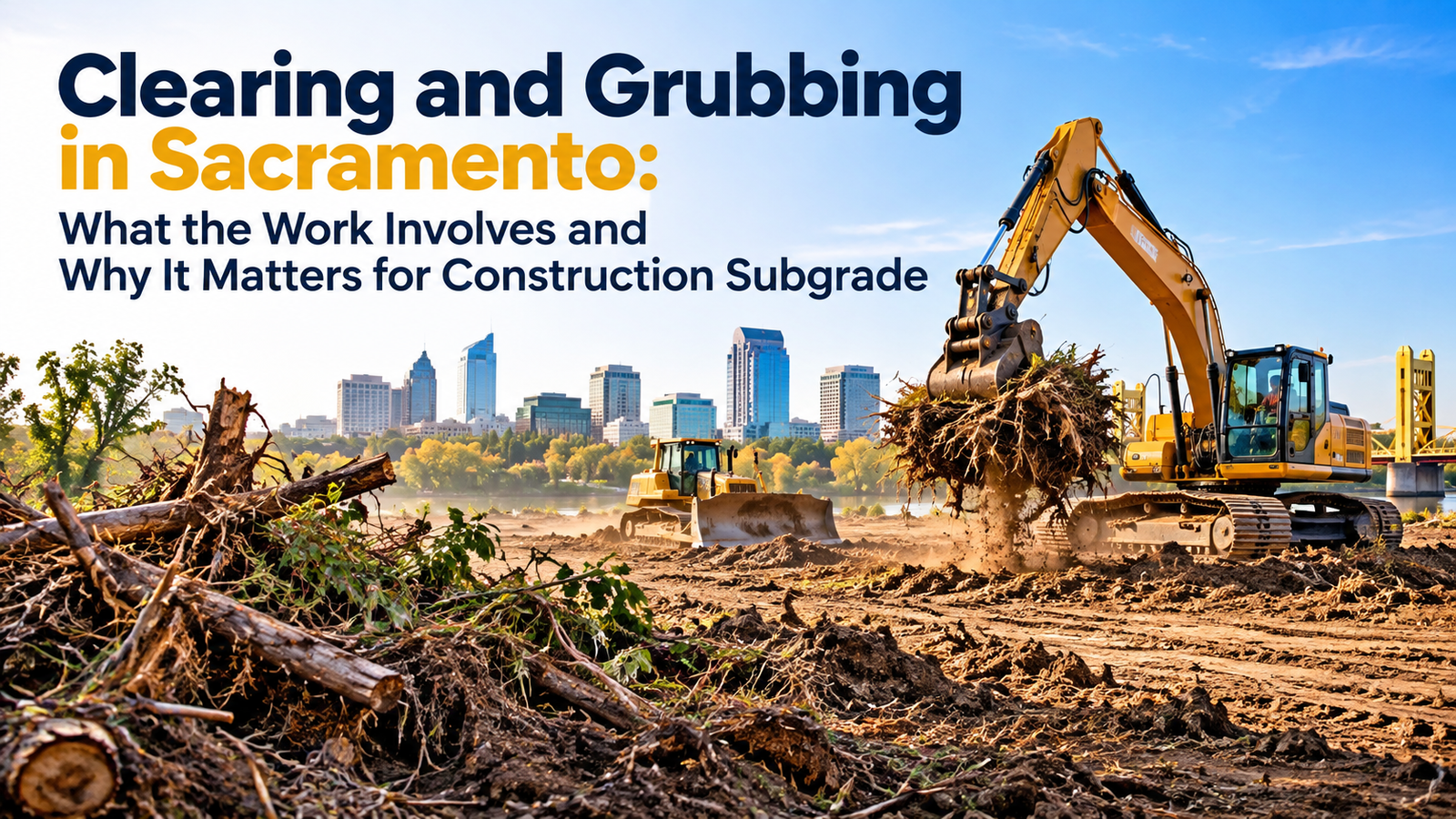
Clearing and grubbing is a construction industry term for the combined process of removing surface vegetation and then excavating and removing the root systems, stumps, and buried organic material from the cleared area. The distinction between Clearing And Grubbing Sacramento is meaningful: clearing removes what is above the surface, while grubbing addresses what is immediately below it. Together, they prepare a site so that subsequent grading, fill placement, and construction can proceed on a subgrade free of organic material that would compress, decompose, and create voids under load.
In Sacramento, clearing and grubbing precedes virtually every significant grading, paving, or construction project. The specific conditions of the Sacramento Valley the deep clay soils, the history of agricultural and riparian vegetation, the dry summer season create a specific operational context for this work. The regulatory environment in California adds permit requirements, dust control obligations, and in some cases biological survey requirements that shape how clearing and grubbing is planned and executed in this region.
Why Grubbing Is as Important as Clearing
The instinct is to focus on vegetation that is visible the trees, shrubs, and brush that clearing removes from the surface. But the root systems, stumps, and buried organic material that grubbing removes are often the primary source of long-term performance problems on cleared and developed sites.
Organic material in the subgrade roots, stumps, and decaying wood compresses under load and, as it decomposes, creates subsurface voids. Pavement, building slabs, and structural fills placed over organic material will settle unevenly as the organics consolidate and decompose below. The differential settlement that results can crack pavement, disrupt utility alignments, and in severe cases affect structural elements founded on the compromised subgrade.
In Sacramento’s Vertisol clay soils, roots from trees and shrubs can penetrate to significant depths. Valley oaks one of the dominant native trees of the Sacramento Valley floor have tap roots that can extend six to ten feet below the surface and lateral roots spreading 50 to 100 feet from the trunk. Large-scale grubbing on sites that carried native oak woodland must account for the depth and extent of this root system in specifying the grubbing depth and the equipment required.
Equipment Used for Clearing and Grubbing in Sacramento
The equipment selection for a Sacramento clearing and grubbing project is driven by the vegetation type, the soil conditions, the season, and the site access. For annual grass and light brush clearing, a bulldozer with a blade or brush rake attachment works efficiently across open areas. For heavier brush and small trees, a track-mounted forestry mulcher grinds vegetation down to chips in a single pass, eliminating the need to haul off bulky cleared material.
Grubbing of large stumps and deep root systems requires a hydraulic excavator. In dry Sacramento clay, stumps are difficult to pull because the soil contracts tightly around roots. Pre-wetting the soil around stumps with a water truck run several days before excavation softens the clay enough to allow more efficient root extraction. A combination of an excavator breaking the ground and exposing root masses, with a dozer or loader clearing extracted material, is the standard approach for large-scale grubbing on Sacramento Valley sites.
Large trees in Sacramento can have root systems so extensive that full mechanical removal is impractical without excessive soil disturbance. In these cases, stump grinding reducing the stump to several inches below grade is combined with removal of the major lateral roots within the construction footprint. The ground stump material and any residual root mass below the grinding depth is then excavated from the building pad area and documented.
Organic Material and Fill Specifications in California Construction
California building codes and standard of practice require that all organic material be removed from areas that will be covered by engineered fill, building pads, or structural slabs. The depth of organic removal is specified by the geotechnical engineer based on the depth of organics found on the specific site. In previously farmed areas of Sacramento, organic topsoil may extend 12 to 24 inches below surface. In riparian areas with accumulated duff and decomposing leaf litter, organic material can be deeper.
After grubbing, the subgrade is inspected and proof-rolled to verify that all significant organic material has been removed and that the exposed native soil provides adequate bearing capacity. Areas where root systems have been removed leave channels and voids that must be filled with compacted aggregate or imported fill to restore uniform subgrade support before construction can proceed.
Stripped topsoil the organic-rich surface layer may have value as a soil amendment for landscaping or reclamation work on other parts of the site. Stockpiling topsoil separately from mineral grubbing debris preserves this value. However, topsoil stockpiles must be managed for erosion control and in some cases for noxious weed seeds that may be present in the stockpile.
SMAQMD Dust Control During Clearing and Grubbing
Clearing and grubbing creates significant quantities of fine dust in dry Sacramento Valley conditions. The SMAQMD Rule 403 dust control requirements apply to all earth-disturbing activities, and clearing and grubbing which involves significant soil disturbance and movement triggers the full range of control measures: watering of disturbed areas twice daily, speed limits on unpaved haul routes, stabilized construction site entrances, and measures to prevent visible dust from crossing property boundaries.
Sacramento County and the City of Sacramento both have dust control ordinances that reinforce SMAQMD requirements at the local level. Sites that fail to implement required dust controls are subject to enforcement from both SMAQMD inspectors and local code enforcement. Clearing and grubbing contractors routinely carry water trucks on site for continuous dust suppression, particularly during peak grubbing operations when dry soil is being broken and moved most aggressively.
Disposing of Grubbing Debris in Sacramento
The material removed during grubbing stumps, root masses, and organic soil must be properly disposed of. Options in the Sacramento area include green waste composting facilities that accept stumps and root masses at approved facilities, biomass energy processors that convert woody material to energy, and in some cases chipping in place to produce mulch for erosion control or landscape use. Organic material cannot go to standard C&D landfills without a facility-specific acceptance review, since its decomposition in a landfill generates methane.
Contaminated grubbing debris root masses from areas with underground storage tank contamination, for example must be managed as potentially contaminated soil rather than clean green waste. Characterization sampling and disposal at a facility permitted for the contamination level are required by California regulatory standards.
Frequently Asked Questions: Clearing and Grubbing in Sacramento
What is the difference between clearing and grubbing?
Clearing removes surface vegetation. Grubbing removes the root systems, stumps, and organic material below the surface. Both are required to prepare a site for construction; grubbing is necessary to prevent differential settlement from decomposing organics in the subgrade.
How deep does grubbing go in Sacramento clay soils?
The depth is specified by the geotechnical engineer based on site conditions. Organic topsoil may extend 12 to 24 inches on farmed Sacramento Valley parcels. Large oak root systems may require grubbing to six feet or more in the immediate vicinity of large trees.
What equipment handles large stumps in hard dry Sacramento clay?
Large hydraulic excavators with rock hammer or root grapple attachments. Pre-wetting soil around stumps several days before excavation improves root extraction efficiency in hard dry clay conditions.
What dust control measures are required during clearing and grubbing in Sacramento?
SMAQMD Rule 403 requires watering of disturbed areas twice daily, speed limits on unpaved haul routes, stabilized site entrances, and prevention of visible dust crossing property boundaries. Water trucks on site are standard practice.
Where does grubbing debris go in Sacramento?
Green waste composting facilities, biomass energy processors, or on-site chipping for mulch. Contaminated debris from sites with known soil contamination requires characterization and disposal at permitted facilities.
Clearing and grubbing in Sacramento is the foundational work that makes everything else possible on a construction site. Removing organic material thoroughly from the surface and from below it produces a subgrade that performs reliably under the loads and the seasonal soil movements of the Sacramento Valley. Professional clearing and grubbing contractors in the region bring the equipment, the regulatory knowledge, and the soil-specific experience that this preparatory work demands.